How Long Is a Tennis Match? Typical Match Times Explained
Find out how long a tennis match usually lasts, how best-of-three and best-of-five formats differ, and which factors can turn a short match into a marathon.
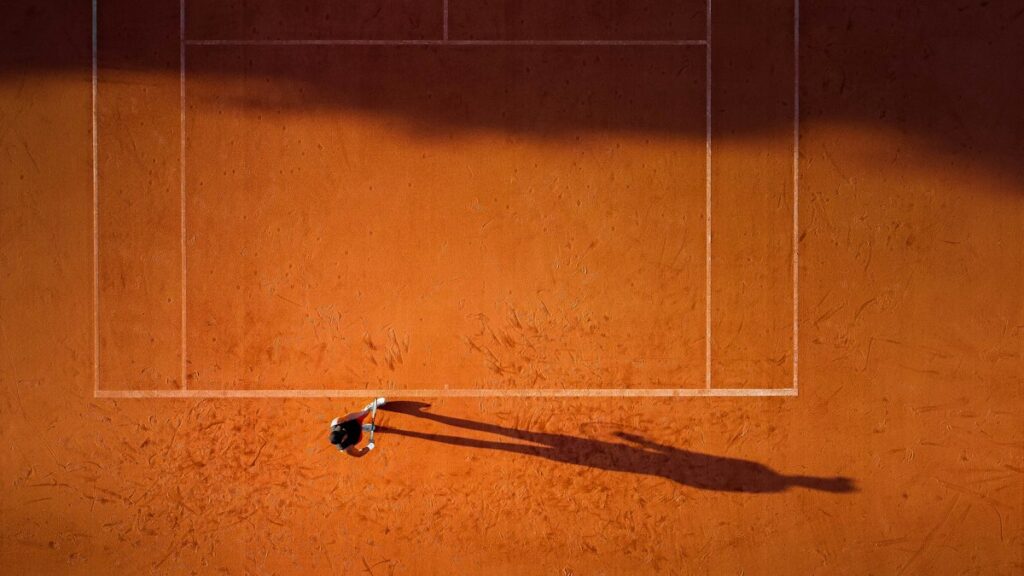
A tennis match can be over in less than an hour or continue for several hours, even when both players are competing in the same format. The biggest variables are the number of sets, the balance between the players, the length of rallies and the tournament’s tiebreak rules.
For most matches, a useful estimate is one to two hours for best-of-three tennis and two to four hours for best-of-five tennis. Those are broad ranges rather than fixed limits. A one-sided match may finish quickly, while a close contest with long sets and repeated deuce games can last much longer.
How long is a best-of-three tennis match?
Best-of-three means the first player to win two sets wins the match. It is the standard format for most men’s and women’s singles matches outside the men’s singles events at the Grand Slam tournaments.
- Quick match: around 45 to 75 minutes
- Typical match: around 90 minutes to two hours
- Long match: two and a half to four hours
A straight-sets result can still take a while. Scores such as 7–6, 7–6 involve two tiebreaks and usually last longer than a 6–2, 6–3 victory. A three-set match has more potential for momentum changes, medical timeouts, long service games and extended rallies.
For tennis betting, a match-length market may use a line such as 22.5 or 25.5 games rather than a time limit. A match that lasts 90 minutes can go over a games line if the sets are close, while a longer match with many breaks of serve may produce fewer total games than expected.
How long is a best-of-five tennis match?
Best-of-five requires a player to win three sets. It is most closely associated with men’s singles at the Australian Open, French Open, Wimbledon and US Open. Because a match can contain up to five sets, the possible playing time is much greater than in best-of-three tennis.
- Short best-of-five match: about 90 minutes to two hours
- Common range: around two to four hours
- Very long match: four hours or more
A three-set win can be relatively brief, especially if one player dominates. A five-set match with several tiebreaks, long rallies and multiple momentum shifts can occupy most of an afternoon. Tournament scheduling may also add delays between sets, during changeovers or because of court conditions.
What makes one tennis match longer than another?
The score is usually more important than the number of games alone. A set ending 7–6 may involve many closely contested points, even though it contains fewer games than a 6–4 set. Deuce games can also add several minutes because a player must win by two points once the game reaches deuce.
The playing styles of the competitors matter too. Big servers may produce short points but frequent tiebreaks. Baseline players who rely on long rallies can extend individual points and games. Two defensive players may create a physically demanding contest with repeated exchanges from the back of the court.
Other factors include:
- Number of sets played
- Frequency of tiebreaks and deciding-set rules
- Medical timeouts and injury treatment
- Toilet breaks and other permitted pauses
- Weather, heat, wind and court surface
- Time between points and changeover duration
- Long delays caused by rain or other interruptions
Clay-court matches often last longer because the slower surface gives players more time to reach the ball and can make breaks of serve more common. Grass courts generally reward quicker points, although a close match between strong servers can still become a lengthy tiebreak battle.
How long does a tennis set and tiebreak take?
A regular set often takes 30 to 60 minutes, but the score can change that dramatically. A 6–0 set may be finished in roughly 20 to 30 minutes, while a 7–6 set can take an hour or more.
A standard tiebreak usually lasts around five to 15 minutes. The exact duration depends on the number of points, the quality of serving and whether the players remain level late in the tiebreak. Some tournaments use a match tiebreak in place of a deciding set, particularly in doubles. That can shorten the final stage of a match, but competition rules vary.
Does a tennis match have a time limit?
Normally, tennis does not have a fixed match clock. Play ends when a player wins the required number of sets, retires or is defaulted. This is why two matches scheduled for the same court session can have very different completion times.
Some competitions use time-based rules between points or apply special deciding-set tiebreak procedures to prevent matches from becoming excessively long. Those rules control the pace or ending of the match; they do not turn tennis into a timed sport.
Frequently asked questions
How long is a tennis match on TV?
A typical best-of-three match occupies around 90 minutes to two hours of playing time, although broadcasts may last longer because of previews, analysis and commercial breaks. A long three-set match can run beyond three hours.
How long is a Wimbledon tennis match?
Most Wimbledon singles matches last between roughly one and four hours, depending on the format, score and weather. Men’s singles matches use best-of-five, while women’s singles matches use best-of-three.
What is the longest a tennis match can last?
There is no universal maximum duration because rules differ by event and matches can be interrupted. A best-of-five match with close sets, extended games and delays can last many hours.
How long should I allow for a tennis match?
Allow at least two and a half hours for a standard best-of-three match if you need to plan around it. For best-of-five tennis, allowing four hours is safer, with extra time needed if the players are evenly matched or bad weather is possible.