Hard Court Tennis Betting: Surface Factors, Markets and Match Analysis
Learn how hard courts influence tennis betting, which player and match statistics matter, and where surface-based analysis can mislead bettors.
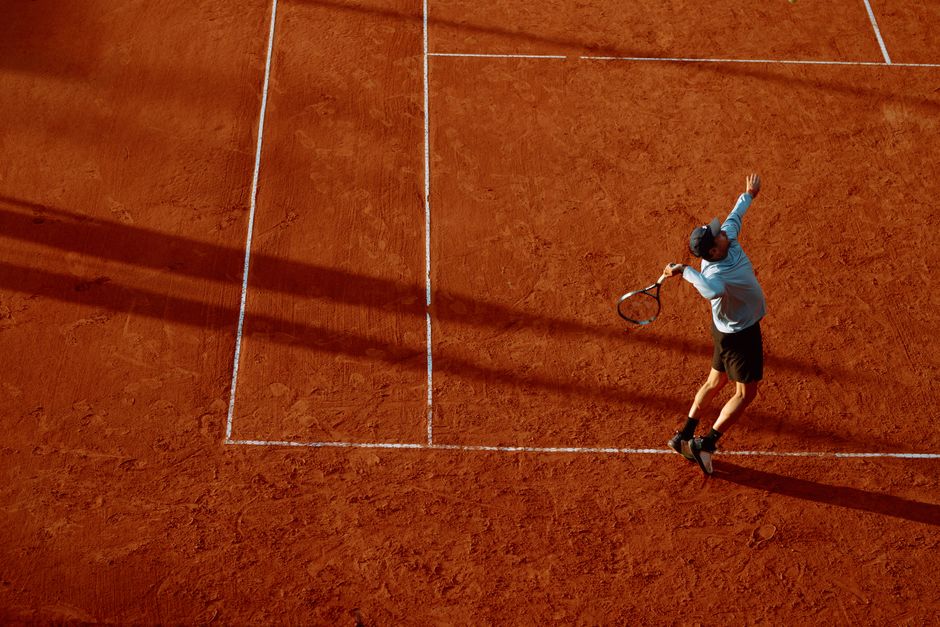
Hard court tennis betting focuses on how players perform on the most common tennis surface and how those conditions may affect match probabilities. Hard courts are generally faster than clay but slower than many grass courts, although pace varies significantly between venues, ball types, temperatures and court construction.
A useful betting analysis does not treat every hard court match as identical. It combines surface-specific results with current form, opponent quality, playing style, fitness, draw context and the available odds. No statistic eliminates uncertainty, and a strong tennis opinion is not automatically a valuable wager.
How hard courts affect tennis matches
Hard courts provide a relatively consistent bounce and usually reward players who can combine baseline power with movement and defensive stability. The surface often supports aggressive first-strike tennis, but the exact balance depends on court speed and environmental conditions.
- Serve and return: A powerful serve can create short points, particularly on quicker courts. Return quality remains crucial because hard-court matches often involve repeated baseline exchanges after the serve.
- Movement: Players need to brake, change direction and recover efficiently. Hard courts can be physically demanding because sliding is less natural than on clay for many players.
- Baseline consistency: A reliable backhand, controlled depth and the ability to defend cross-court patterns can be valuable in longer rallies.
- Transition play: Players who can turn a defensive position into an attack may benefit when opponents struggle to finish points at the net or from inside the baseline.
Hard-court conditions differ across tournaments. Indoor courts usually remove wind and may produce more predictable serving conditions, while outdoor events can be affected by heat, humidity and gusts. A tournament’s historical reputation for being fast or slow is useful context, but recent court data and match conditions are more relevant than labels alone.
Statistics that matter for hard court betting
Surface-specific data is more informative than a player’s overall win rate, but it should be interpreted over a meaningful sample and adjusted for opponent strength. Useful indicators include hard-court hold percentage, break percentage, service points won, return points won, tiebreak frequency and performance against different styles.
First-serve points won can reveal whether a player converts strong serving into a genuine advantage, while second-serve points won may expose vulnerability against aggressive returners. Break-point results deserve caution: they can describe match outcomes, but they are also volatile and may regress toward a player’s broader serving and returning numbers.
Expected patterns can also be estimated through combined measures such as service points won plus return points won, adjusted for the quality of opposition. Elo-style ratings calculated separately for hard courts may help compare players more fairly than rankings, which reflect tournament points rather than a direct estimate of current match strength.
Matching player styles to hard court conditions
A hard-court matchup is not determined by surface statistics alone. A big server may have an advantage against a player with a weak return position, but that edge can shrink if the opponent absorbs pace well and extends rallies. Likewise, a counterpuncher may benefit from an opponent’s unforced errors, yet struggle if the court is quick enough to prevent defensive recovery.
Consider how the players’ strengths interact:
- An aggressive server against a poor returner may create frequent holds and tiebreak opportunities.
- A consistent returner against a low-quality second serve may generate more break chances than overall rankings suggest.
- A high-volume baseline player may pressure an opponent whose movement deteriorates during long exchanges.
- A short-point specialist may be less effective if conditions slow the court or if the opponent handles first strikes comfortably.
Head-to-head records can add context, but they should not be treated as a permanent matchup law. Previous meetings may have occurred on another surface, with different fitness levels, coaches, balls or tactical plans. Recent tactical evidence is normally more useful than a simple win-loss count.
Hard court tennis betting markets
Match-winner markets are the simplest way to express a view on a hard-court contest. Their main limitation is that the price may already reflect surface performance, ranking, recent results and public opinion. Comparing the implied probability in the odds with your own estimated probability is more useful than selecting the player who appears most likely to win.
Set betting and game handicaps provide more specific alternatives. A favourite can win the match without covering a game handicap if several sets are close. Conversely, a player can lose while covering a handicap after taking one competitive set. These markets require a view on expected margin, not merely match outcome.
Total games and set totals are linked to serve quality, return pressure and the likelihood of tiebreaks. Over markets may be supported by evenly matched servers, while under markets may make more sense when one player has a significant return or fitness advantage. Weather, indoor conditions and best-of-three versus best-of-five format can materially change the expected number of games.
Live betting introduces additional information, such as serve speed, movement and tactical adjustments, but it also increases the risk of reacting to a small sample. A player who loses an early break is not necessarily playing badly, and a temporary run of break points does not guarantee a lasting advantage.
Common mistakes in surface-based analysis
One frequent mistake is assuming that a player’s hard-court record measures only surface ability. The record may be influenced by draw difficulty, injury, tournament level, scheduling and the player’s age during the sample. A recent hard-court title can be relevant without proving that the player is stronger than the market price suggests.
Another error is treating court speed as fixed. Balls become slower or faster depending on the event, altitude and temperature, while humidity affects ball movement and physical demands. Outdoor wind can reduce the value of pure serving and increase the importance of margin and rally tolerance.
Rankings also have limits. They are designed to allocate points over a defined period and may lag behind a player’s current form. Recent match results should be examined alongside opponent quality, not counted mechanically. A straight-sets win over a struggling opponent does not necessarily provide more evidence than a close loss to an elite player.
A disciplined approach to hard court tennis bets
Start by forming a probability estimate before looking for a price, using surface performance, matchup evidence, fitness information and tournament conditions. Then compare that estimate with the bookmaker’s implied probability after accounting for the margin built into the market. A bet has potential value only when the estimated probability is sufficiently higher than the implied probability to justify model uncertainty.
Keep the stake size separate from confidence in the narrative. Tennis has substantial variance from injuries, medical timeouts, tiebreaks and short bursts of serving dominance. A conservative staking method can limit the effect of incorrect assumptions, while a written record of prices and results helps distinguish genuine analytical improvement from short-term luck.
Bet only with money you can afford to lose, check the rules and legality that apply where you live, and avoid chasing losses. Surface analysis is a way to structure uncertainty, not a method for guaranteeing winning bets.