NBA Player Prop Betting: How Player Markets Work
Learn how NBA player prop betting works, including points, rebounds, assists, odds, line movement, research methods, and responsible staking decisions.

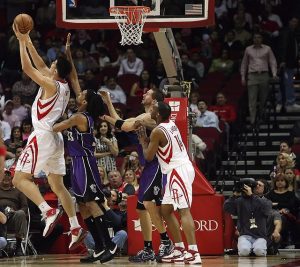
NBA player prop betting focuses on an individual player’s performance rather than the final result of the game. A sportsbook may offer markets such as points, rebounds, assists, three-pointers, steals, blocks, turnovers, or combinations like points and assists.
Each market normally has a statistical line and two possible outcomes. For example, a points prop might be listed at 24.5 with prices for over and under. The wager wins if the player finishes above or below that line, subject to the sportsbook’s settlement rules.
How NBA player props work
Player prop markets are usually available for games on the NBA schedule and may remain open until tip-off. Some sportsbooks also offer live NBA player props, where the line and odds change during the game.
Common NBA player prop markets
- Points: the player’s total points scored.
- Rebounds: offensive rebounds, defensive rebounds, or total rebounds.
- Assists: completed passes that directly lead to a made field goal, according to official scoring.
- Three-pointers: successful three-point field goals.
- Steals and blocks: defensive statistics credited by the official scorer.
- Turnovers: possessions lost by the player.
- Combo props: combined statistics such as points plus rebounds or points plus assists.
- Double-doubles and triple-doubles: milestone-based markets involving two or three statistical categories.
Settlement can differ between operators. Check rules for postponed games, players who leave early, overtime, inactive players, and whether a minimum amount of playing time is required. A player who does not take part may be treated differently from a player who enters the game and records limited minutes.
What to research before betting NBA player props
A season average is only a starting point. The most useful NBA player prop analysis combines role, expected minutes, matchup, team news, and recent usage.
Playing time and role
Minutes are often the strongest factor in a player’s opportunity to accumulate statistics. A starter moving into a larger role after an injury can receive more possessions, while a veteran on a minutes restriction may have a lower ceiling than his normal numbers suggest.
Review the team’s rotation, recent substitution patterns, back-to-back scheduling, and coach comments. Also check whether a player is starting or coming off the bench. A change in role can affect both volume and the type of opportunities available.
Usage and team absences
Usage rate measures how frequently a player finishes possessions through a shot, free throw, or turnover while on the court. It can rise when a high-volume teammate is absent. That does not automatically make an over bet attractive, because the replacement player, opponent, pace, and expected efficiency still matter.
Absences can also create secondary effects. A missing point guard may reduce assist chances for one teammate while increasing ball-handling duties for another. A team without a starting center may allow more rebounds near the basket or change its defensive strategy.
Opponent and matchup factors
Consider how the opposing team defends the relevant statistic. A team that plays at a fast pace creates more possessions, which can benefit points, assists, and rebound opportunities. Defensive schemes also matter: frequent double teams may reduce a scorer’s shot quality but increase potential assists.
Use opponent statistics carefully. A ranking against point guards or centers can be distorted by injuries, schedule strength, and the types of players faced. Matchup data is more useful when combined with expected minutes and the player’s normal role.
Recent form and sample size
Recent games can reveal a genuine role change, but a short streak is not automatically predictive. Separate changes in opportunity from changes in shooting results. For example, more shot attempts may be sustainable after a teammate’s injury, while an unusually high three-point percentage may be less reliable.
Compare several samples, such as the full season, games since a rotation change, home and away splits, and performances with key teammates on or off the court. Small samples should be treated as supporting evidence rather than a complete forecast.
Understanding NBA player prop odds and value
Odds show the potential return and the sportsbook’s assessment of probability. At decimal odds of 1.90, a successful stake of 10 units returns 19 units, including the original stake. The implied probability is calculated as 1 divided by the decimal odds, or about 52.6% before considering the bookmaker’s margin.
A bet has theoretical value when your estimated probability is higher than the probability implied by the price. That estimate should account for uncertainty. A projection of 25 points against a line of 24.5 is not automatically a strong over if the expected range is wide or the player’s minutes are unclear.
Compare prices across legal sportsbooks where available. Two operators may offer the same line at different odds, or one may list 24.5 points while another lists 25.5. The line and the price both matter. A better number can be more valuable than a slightly better price on a less favorable line.
Line movement and live NBA player props
Player prop lines may move after injury announcements, starting-lineup news, betting activity, or changes to the game total. A move from 22.5 to 24.5 points represents a meaningful change, even if the odds look similar.
Live betting adds information about pace, minutes, foul trouble, and shot attempts, but it also reduces the time available to assess the market. Live lines may include wider margins and can change before a wager is accepted. Confirm the player’s current status and the exact market before placing a bet.
Common mistakes in NBA prop betting
- Relying only on the last game: one exceptional performance may reflect unusual shooting or overtime.
- Ignoring minutes: strong per-minute production has limited value if playing time is uncertain.
- Chasing points: a high scorer may have a lower points ceiling against a defense that forces the ball away from him.
- Overlooking correlation: several props from the same game may depend on one script, such as a fast-paced contest or a blowout.
- Using parlays without checking dependency: combined bets can carry additional risk even when the selections appear related.
- Failing to check settlement rules: player participation, overtime, and early exits can affect the result.
Responsible NBA player prop betting
Set a fixed betting budget and use stakes that remain affordable if lost. Avoid increasing stakes to recover losses, and do not treat statistical research as a guarantee of profit. Sportsbooks, market availability, minimum-age rules, and legal protections vary by country and region.
Use licensed operators where betting is legal, read the terms for each market, and consider deposit limits, time-outs, or self-exclusion tools if betting becomes difficult to control.