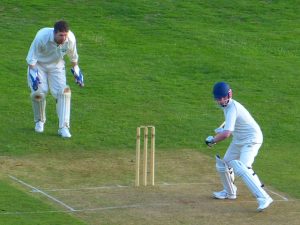
Cricket Home Advantage Betting: How Venue Factors Affect Your Analysis
Learn how pitch conditions, weather, crowd support, travel, and venue records can influence cricket home advantage betting without relying on location alone.

Cricket home advantage betting means assessing whether a team is more likely to perform well because it is playing at a familiar venue. Home conditions can influence pitch behaviour, weather, team selection, travel demands, and crowd support. They can also affect different betting markets in different ways, so a venue record should be treated as one part of the analysis rather than a guaranteed betting signal.
What creates home advantage in cricket?
Home advantage in cricket is usually linked to familiarity. Players understand how the ball tends to move at a local ground, how quickly the outfield plays, and which areas of the boundary are easiest to target. Coaches and captains may also have more experience selecting a team for those conditions.
The effect varies by format. A Test match can be shaped by how a pitch changes over several days, while a T20 match may be decided by powerplay conditions, dew, boundary size, and the toss. In one-day cricket, the balance between batting depth, pace bowling, and spin can change significantly from one venue to another.
- Pitch familiarity: Local players may know whether the surface usually favours seam, swing, spin, or stroke play.
- Weather knowledge: Teams accustomed to local humidity, heat, wind, or cloud cover may prepare more effectively.
- Travel and routine: The home side avoids long travel and may keep a more consistent training and recovery schedule.
- Crowd support: A strong home crowd can add energy, although its impact is difficult to measure consistently.
- Selection advantages: Domestic knowledge can help a team choose the right combination of bowlers, batters, and all-rounders.
How to assess a venue before placing a cricket bet
Start with recent venue-specific data, but avoid treating a simple home win percentage as proof of a lasting edge. Results can be distorted by the strength of the teams involved, changes in competition format, and a small number of matches.
Compare the home team with its opponent across several useful indicators:
- Recent results at the ground and in similar local conditions.
- First-innings and second-innings scoring rates.
- Wicket-taking methods, such as pace, swing, seam, or spin.
- Chase success compared with defending totals.
- Powerplay runs and wickets in limited-overs matches.
- Death-overs batting and bowling performance in T20 cricket.
- How often the team wins after winning or losing the toss.
Venue statistics are more useful when combined with current team information. A home advantage may be weaker if key local players are injured, if the side has recently changed its captain or coaching staff, or if the match is being played under unusual conditions.
Pitch, weather, and the toss
Pitch and weather analysis often matters more than the label of home team. A dry surface may increase the value of spin, while cloud cover and moisture can help seam bowlers early in an innings. High humidity can support swing, and evening dew may make it harder for a side to grip the ball or defend a total.
The toss can be especially relevant in limited-overs cricket. If dew is expected later, captains may prefer to bowl first because the ball can skid on during the chase. In other matches, a deteriorating pitch may make batting first more attractive. Check the latest ground report, forecast, announced squads, and toss result before acting on a pre-match view.
These factors can influence markets beyond the match winner. A slow pitch may support lower total-runs expectations, while a flat surface with short boundaries can make over markets and team totals more aggressive. Conditions should still be assessed alongside recent batting form and bowling availability.
Which cricket betting markets reflect home conditions?
The match-winner market is the most obvious place to consider home advantage, but it is not the only option. A team that benefits from its venue may also have an improved chance of covering a handicap, reaching a team-total line, or taking more wickets during a particular phase of the innings.
Potentially relevant markets include:
- Match winner: Useful when venue conditions align clearly with the stronger team’s skills.
- Team totals: Consider whether the surface and boundary dimensions support the team’s batting style.
- Run lines and handicaps: These require a view on the likely margin, not just the winner.
- Top run-scorer or wicket-taker: Venue data may favour a batter suited to the ground or a bowler who exploits its conditions.
- First-innings totals: Weather, pitch pace, and toss expectations can be central to this market.
Odds matter as much as the cricket opinion. If the bookmaker has already priced in a strong home record, the home team may still be likely to win without offering value at the available odds. A bet is only attractive when your estimated probability is higher than the probability implied by the price after allowing for the bookmaker’s margin.
Common mistakes in home advantage betting
One frequent error is using an overall home record without separating formats. A team may be dominant at home in Tests but ordinary in T20 matches, or its record may reflect a particular generation of players that is no longer involved.
Another mistake is ignoring the opponent’s strengths. A visiting team with experienced spin players, strong chasing numbers, or a deep pace attack may be well equipped for the venue. Head-to-head results can also be misleading when squads, coaches, and conditions have changed.
Be cautious with small samples, too. Five wins at a ground can look persuasive but may tell you little if the matches involved different competitions and uneven opposition. Use longer-term records to understand the venue, then give more weight to recent performances, confirmed line-ups, and the specific conditions on match day.
A sensible approach to cricket home advantage betting
Build the analysis around the venue, but do not let the venue decide the bet by itself. Compare the teams’ recent form, likely line-ups, tactical styles, pitch report, forecast, toss conditions, and available odds. Record your reasoning before the match so you can distinguish a sound process from a result that was simply fortunate.
Betting outcomes remain uncertain, and even a well-supported home advantage assessment can fail because of an early injury, an unexpected pitch change, or an exceptional individual performance. Set a budget, avoid chasing losses, and only stake money you can afford to lose.