Cricket Over Under Betting: How Runs Markets Work
Learn how cricket over under betting works, including total-runs markets, line movement, settlement rules, match formats, and the factors that can affect an over or under result.
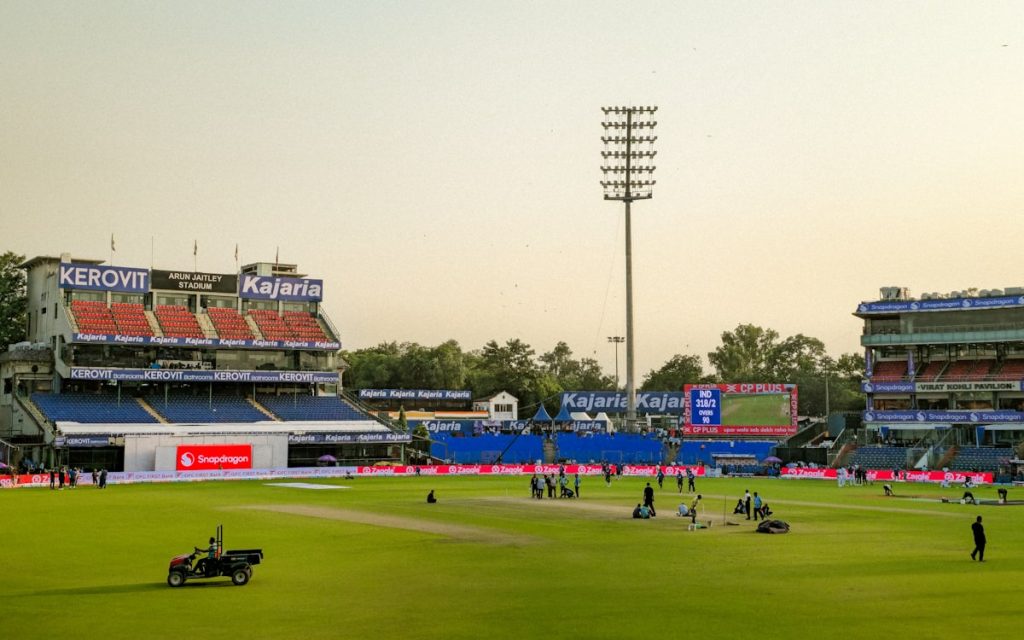
A cricket total can look deceptively simple: a bookmaker posts a number of runs, and the bettor chooses whether the final score will finish above or below it. In practice, cricket over under betting depends on the match format, innings structure, venue, weather, playing conditions, and the exact settlement rules attached to the market.
These markets are also called totals or over/under runs betting. The central question is not which team will win, but whether the relevant innings or match total will exceed the bookmaker’s line.
How cricket over under markets work
A bookmaker might set a total of 315.5 runs for a team’s innings. Selecting over means the team must score at least 316 runs. Selecting under means the final total must be 315 runs or fewer. The half-run prevents a draw between the two sides of the market.
The market may refer to several different totals, so the bet slip needs to be read carefully. Common options include:
- Match total runs: the combined score of both teams.
- Team total runs: the score made by one specified team.
- First-innings total: the score in the opening innings of a limited-overs match.
- Innings runs: a total for a particular innings, often in live betting.
- Powerplay or over totals: the number of runs scored during a defined set of overs.
For example, if a Twenty20 team total is listed at 168.5, an innings score of 169 wins an over selection, while 168 loses it. Extras usually count toward the team’s total because they are included in the official score, but the bookmaker’s rules take priority.
Why the line differs between formats
A cricket over under line cannot be judged sensibly without considering the number of scheduled overs. A Test match, one-day international, and T20 fixture have very different scoring patterns and settlement conditions.
In T20 cricket, a team has 20 overs, so the total is heavily influenced by powerplay scoring, boundary frequency, wickets in hand, and the final five overs. One-day matches generally offer 50 overs, creating more time for a recovery after early wickets and a wider range of possible totals. Test match totals may be posted for a session, innings, or match, with declarations and follow-on decisions adding further complexity.
Rain can alter the calculation. If a limited-overs match is shortened, the market may be void, recalculated, or settled under a specific revised-overs rule. Duckworth-Lewis-Stern adjustments can affect the target and playing conditions, but they do not automatically determine how every total-runs market is settled. Always check whether the wager applies to the original scheduled innings or the revised match.
What can move a cricket totals price
The number displayed by a bookmaker reflects an estimate of expected scoring, while the odds reflect the balance of money and perceived risk. Team selection is one of the clearest influences. A strong batting order, an aggressive opener, or the absence of a key fast bowler can change the expected run rate before the first ball.
Pitch and weather reports also matter, although they are easy to overinterpret. A hard surface may support stroke play, while grass, moisture, or a slow pitch can make timing more difficult. Dew in a day-night match may affect grip and chasing conditions. The toss can then cause the line or price to move, particularly when captains have a strong preference for batting first or second.
Live cricket totals respond to events in the innings. A team that reaches 55 without loss after six overs may have a different projected total from one that is 38 for three at the same stage. Wickets, required run rate, remaining overs, batter quality, partnerships, and weather interruptions all influence the live market. A fast start does not guarantee an over result, just as a poor powerplay does not make an under result certain.
Important settlement details to check
Two markets with similar names can have different rules. Before placing any cricket over under bet, check the following details:
- Whether the total covers one team, one innings, or the entire match.
- Whether abandoned, shortened, or no-result matches are void.
- How rain interruptions and revised targets are handled.
- Whether super overs count toward the relevant total.
- How retired hurt batters, innings declarations, and forfeited innings are treated.
- Whether tied totals are possible and, if so, whether a push or refund applies.
Some bookmakers require a minimum number of overs for a market to stand, while others use sport-specific rules for completed matches. The wording under the market or in the bookmaker’s cricket rules is more reliable than assumptions based on another platform.
Using totals information responsibly
Statistical data such as recent run rates, venue scoring averages, boundary percentages, dot-ball rates, and wickets lost can provide context, but none of these measures removes uncertainty. Small samples can be misleading, and past scores do not guarantee a future total.
Odds also include a bookmaker margin, so comparing available prices can reveal differences in market value without changing the underlying risk. Set a fixed entertainment budget, avoid chasing losses, and treat cricket betting as a form of paid entertainment rather than an income source. Gambling should be legal in your location, and local restrictions and age requirements apply.