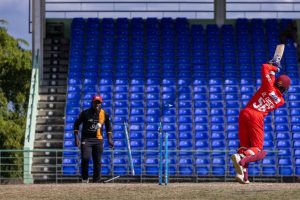
Cricket Opening Partnership Betting: How the Market Works
Learn how cricket opening partnership betting is settled, which match factors influence the first-wicket stand, and how to assess this market responsibly.

Cricket opening partnership betting focuses on the runs scored by the two opening batters before the first wicket falls. Depending on the bookmaker and competition, you may be able to bet on the opening stand reaching a total, staying under a line, or falling within a specified range.
What is an opening partnership bet?
An opening partnership is the number of runs added by the two batters who begin an innings. The partnership ends when one of them is dismissed, or when the innings finishes without a wicket falling. Runs scored through boundaries, running between the wickets, extras, and penalty runs may be included according to the market rules.
Common cricket opening partnership markets include:
- Over or under a runs line: Predict whether the first-wicket partnership will score above or below a quoted total.
- Partnership range: Select a band such as a low, middle, or high scoring opening stand.
- First-wicket method: In some markets, predict whether the opening partnership ends through a catch, bowled dismissal, run out, or another method.
- First-wicket over: Predict the over in which the opening partnership will end.
Market names and settlement rules vary. A bet may refer to the first innings, a named team, a specific match format, or a designated innings in a multi-innings game. Check the rules before placing any wager.
How opening partnership betting is settled
The first wicket usually determines the final opening stand. For example, if two openers score 42 runs before one is dismissed, a total-points market is generally settled on 42, subject to the bookmaker’s rules.
If the innings ends with both openers still batting, the partnership may be settled on the total number of runs scored by the team in that innings. A declaration, rain interruption, abandoned match, retired hurt batter, or innings forfeiture can lead to special settlement conditions.
One detail that can cause confusion is a batter retiring hurt. A partnership does not necessarily end in the same way as it would after a dismissal. Some operators void specific markets in this situation, while others settle them using the official scorecard. The treatment of dead balls, penalty runs, super overs, and shortened matches can also differ.
Factors that can affect the first-wicket stand
Opening partnership predictions require more than comparing team batting averages. The conditions during the first overs can have a substantial effect on the likely score and the chance of an early wicket.
- Pitch behaviour: Seam movement, uneven bounce, turn, and the pace of the surface can influence how safely openers score.
- Weather and visibility: Cloud cover, humidity, dew, wind, and poor light may affect swing, grip, and shot selection.
- New-ball bowling: The quality of the opposing opening bowlers and the number of available seam options matter during the initial powerplay.
- Opening pair: A stable partnership, left-right combination, strike rotation, and recent form can shape the expected scoring pattern.
- Match format: Test cricket, one-day matches, and T20 games produce different scoring rates, risk levels, and powerplay strategies.
- Venue history: Ground dimensions, average first-innings scores, and typical early-wicket rates can provide context, although past matches are not guarantees.
- Team tactics: A side may attack from the first over in a T20 match, while a Test team may prioritise survival against the new ball.
Line-ups should be confirmed before assessing a cricket first-wicket partnership market. An opener moved down the order, a late replacement, or a change in the bowling attack can make an earlier price or line less relevant.
How to assess an opening partnership line
Start by identifying exactly what the market measures: the first innings, the first wicket, a particular team, or a limited number of overs. Then compare the line with several pieces of evidence rather than relying on one recent score.
Useful information can include the opening pair’s scoring rate, dismissal frequency, performance against the likely bowling style, powerplay run rate, and the venue’s early-innings scoring pattern. In longer formats, leave percentage and survival against swing may matter more than boundary frequency. In T20 cricket, powerplay intent, boundary rate, and matchup data can be more relevant.
Sample sizes deserve care. A few large opening stands may inflate a player’s recent average, while an unusually difficult pitch can depress results. Averages, medians, first-wicket fall rates, and the distribution of scores can together give a clearer picture than a single headline statistic.
Common mistakes in first-wicket partnership betting
- Ignoring settlement wording: Assuming all extras or interruptions are treated identically can lead to misunderstandings.
- Using only team totals: A high-scoring team does not always produce a large opening stand; wickets may fall early before the middle order scores heavily.
- Overvaluing head-to-head records: Old results may involve different players, pitches, coaches, and match conditions.
- Forgetting toss information: Batting first or second can change the weather exposure, target pressure, and approach to the opening overs.
- Chasing a result after an early wicket: Live betting prices move quickly and can encourage impulsive decisions.
Responsible use of cricket betting markets
Opening partnership bets are uncertain outcomes, not reliable ways to make money. Set a fixed budget before betting, use only money that can be lost without affecting essential expenses, and avoid increasing stakes to recover previous losses. Deposit limits, time limits, and self-exclusion tools are available through many regulated operators.
Only use licensed betting services available in your jurisdiction, and check the applicable age and gambling laws. If betting stops feeling recreational or becomes difficult to control, pause and seek help from a recognised gambling-support organisation in your country.