Correct Score Betting Strategy: Probability, Prices and Risk Management
A rigorous look at correct score betting strategy, including probability estimates, market prices, match analysis, common mistakes and responsible bankroll management.
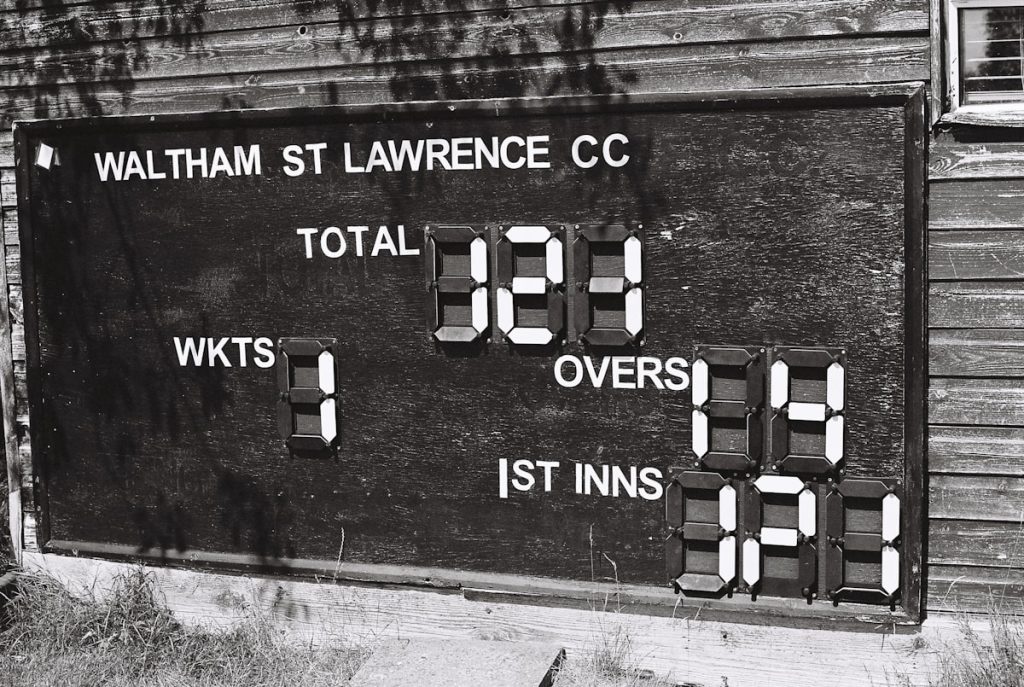
A correct score betting strategy attempts to identify the most likely final score in a football match and compare that estimate with the bookmaker’s price. Unlike a standard match-winner bet, a correct score selection must account for both teams’ goals, the likely match tempo and how the result may change during play. That precision makes the market attractive, but it also creates high variance and a greater chance of losing a stake.
The central principle is not to predict a score with certainty. It is to estimate probabilities, convert odds into implied probabilities, and decide whether the available price is higher than the outcome’s assessed likelihood. Even a well-researched selection can lose because football scores are low-frequency events with many possible outcomes.
How correct score betting works
In a correct score market, the bet wins only if the match finishes with the selected score after the period specified by the market, usually 90 minutes plus stoppage time. Extra time and penalties normally do not count unless the bookmaker’s rules say otherwise.
For example, a selection of 2–1 requires the home team to score exactly twice and the away team exactly once. A 1–0 bet does not win if the match ends 2–0, even though the same team won. This narrow settlement condition explains why correct score odds are much higher than prices for broader markets such as match result, double chance or total goals.
Some bookmakers also offer related markets such as half-time correct score, winning margin, score bands and “any other score.” These are not interchangeable. A strategy based on full-time scoring patterns should not be applied to a half-time market without adjusting for the shorter period and different goal distribution.
Estimating the most likely football scores
A useful starting point is to estimate expected goals for both teams rather than selecting a score from intuition. Relevant inputs may include recent scoring and conceding rates, home advantage, injuries, suspensions, projected line-ups, tactical style, rest days and the strength of previous opponents.
Simple statistical models often use a Poisson distribution to estimate the probability of each team scoring zero, one, two or more goals. If the expected goals for the home team are represented by one value and the expected goals for the away team by another, the model can combine those distributions to produce probabilities for scores such as 0–0, 1–0, 1–1 and 2–1.
This approach is useful but incomplete. Goals are not perfectly independent, and match state can change the scoring pattern. A team that scores first may become more defensive, while a trailing side may take greater risks. Low-scoring matches can also be affected disproportionately by one penalty, red card or defensive error. More advanced models may adjust for team strength, correlation between scores and competition-specific scoring rates, but additional complexity does not remove uncertainty.
Comparing probability with bookmaker odds
Decimal odds can be converted into a basic implied probability by dividing one by the decimal price. Odds of 6.00 imply approximately 16.7% before accounting for the bookmaker’s margin. If a bettor estimates that the score has a 19% chance, the theoretical expected value is positive before other costs and model errors are considered.
The calculation is only as reliable as the probability estimate. A small error matters greatly in a high-odds market. If the actual probability is 14% rather than 19%, a selection priced at 6.00 is not a value bet. For that reason, it is better to work with a probability range and require a meaningful margin over the implied probability rather than treating a single model output as precise.
Bookmaker margins also vary between markets. Correct score markets often contain wider margins than major match-result markets, and prices may move sharply when team news appears. Comparing prices across regulated bookmakers can reveal differences, but a better price does not make an inherently uncertain prediction safe or reliable.
Match factors that can change a score estimate
- Team strength and chance creation: Shot volume, expected goals, quality of chances and set-piece threat provide more context than recent final scores alone.
- Home and away performance: Some teams change their pressing, possession and defensive approach substantially depending on venue.
- Line-ups and absences: Missing strikers, centre-backs or goalkeepers can affect both the expected scoring rate and the likely tactical plan.
- Match incentives: A league position, knockout tie or need for a win can influence risk-taking, although assumptions about motivation should be supported by tactical evidence.
- Schedule and fatigue: Congested fixtures may reduce intensity or lead to rotation, but fatigue does not automatically produce more goals.
- Weather and pitch conditions: Heavy rain, strong wind or a poor surface can affect passing quality and finishing, though the effect varies by team.
Head-to-head records should be treated cautiously. Older meetings may involve different coaches, players and tactical systems. Recent form can also mislead if it is based on a small sample or unusually easy or difficult opponents.
Choosing between exact scores and broader markets
Exact score betting has a narrow winning condition. If a model assigns substantial probability to several nearby outcomes, a broader market may represent the analysis more accurately. For example, a prediction that a match will be close and low-scoring does not necessarily justify choosing 1–0 rather than 0–0 or 1–1.
Markets such as under 2.5 goals, both teams to score, draw, winning margin or correct-score bands can reduce precision but may also reduce variance. The appropriate market depends on what the evidence actually supports. A confident view about total goals is not the same as a confident view about the exact distribution between the teams.
Combining several correlated bets can create hidden concentration. A 1–0 correct score, home win and under 2.5 goals all rely on overlapping assumptions. If the match develops differently, multiple wagers may lose together. Correlation should be considered before treating several selections as separate opportunities.
Staking and risk management
Because correct score outcomes are relatively infrequent, staking should be conservative. A fixed small stake makes results easier to evaluate and prevents a losing run from causing rapid bankroll damage. A proportional staking method can also be used, but the percentage should reflect the uncertainty of the probability estimate rather than the apparent attractiveness of the odds.
Increasing stakes after losses, chasing a missed winner or using a large stake because a price looks attractive are forms of poor risk control. There is no reliable betting pattern that makes a losing sequence “due” to end. Keep a record of the selection, odds, estimated probability, closing price, result and reasoning so that performance can be assessed over a meaningful sample.
Separate entertainment money from essential expenses, set deposit and loss limits, and avoid betting with borrowed money. If gambling stops feeling controlled, use the available self-exclusion, blocking and support tools in your jurisdiction.
Common mistakes in correct score betting
- Confusing likely with valuable: The most likely score may still be overpriced, while a less likely score can have better expected value at a sufficiently high price.
- Relying on recent results alone: Final scores do not show the quality of chances, red cards or strength of opposition.
- Ignoring bookmaker margin: The displayed odds do not represent fair probabilities unless the market has been adjusted for its overround.
- Overfitting statistics: A model built around too many variables can describe historical noise rather than produce useful forecasts.
- Assuming a low-scoring team always creates low-scoring matches: The opponent’s style and the expected game state also matter.
- Using live betting without discipline: In-play prices incorporate new information quickly, while emotional reactions to one attack or goal can lead to poor decisions.
A practical framework for evaluating a selection
Start by defining the market and settlement rules. Estimate expected goals using relevant team and match information, then generate a range of plausible scores rather than focusing immediately on one outcome. Convert the available odds into implied probability, allow for the bookmaker’s margin, and compare the price with a cautious probability estimate.
Next, test whether the same reasoning supports a broader market with lower variance. Consider lineup uncertainty, possible tactical changes and the consequences of an early goal. If the edge depends on several fragile assumptions, pass on the bet. No-bet is a valid outcome when the price does not compensate for the uncertainty.
Correct score betting strategy is therefore best understood as probability analysis under substantial variance, not as a method for guaranteeing accurate predictions. Sound records, realistic assumptions, price comparison and strict limits matter more than finding a supposedly certain score.