ODI Betting Strategy: How to Analyse One-Day Cricket Markets
Learn how ODI betting strategy works by assessing team strength, pitch conditions, toss impact, weather, player roles, match phases, and market prices without treating predictions as guarantees.
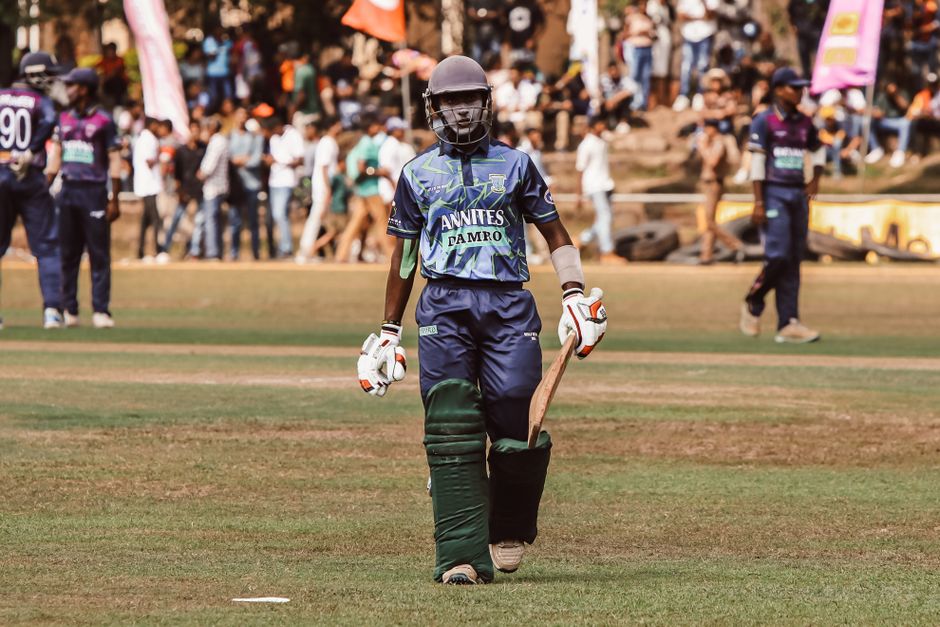
ODI betting strategy is less about finding a single winning tip and more about estimating probabilities accurately enough to compare them with the odds available. One-day internationals combine a fixed 50-over structure with changing conditions, so a useful assessment must account for batting depth, bowling resources, pitch behaviour, weather, toss effects, and the timing of each market.
No method can remove uncertainty from cricket betting. Injuries, dropped catches, tactical changes, rain interruptions, and individual performances can overturn a well-reasoned prediction. The practical objective is to make selective decisions, understand the price being offered, and avoid staking money that would create financial pressure.
What makes ODI betting different?
ODI matches have more tactical phases than short-format cricket but less time for recovery than Test cricket. A team has 50 overs to build an innings, preserve wickets, accelerate scoring, and then defend or chase a target. That creates several distinct sources of information for ODI match betting.
- Powerplay conditions: The opening overs can reward aggressive batting, but early wickets may expose a weaker middle order.
- Middle-overs control: Spin, changes of pace, and strike rotation often determine whether an innings stagnates or builds a platform for the final overs.
- Death-overs execution: Boundary hitting, yorkers, slower balls, and fielding quality influence the final score disproportionately.
- Resource management: Losing wickets early reduces the batting options available later, while an attack with limited specialist bowlers can become vulnerable near the end.
These phases matter because a team may be stronger overall but poorly suited to a particular venue or opponent. A high-scoring ground can amplify batting depth, while a slow surface may make shot-making difficult and increase the value of accurate spin bowling.
Build an ODI match assessment
Start with the likely playing XIs rather than relying only on tournament standings or recent results. Check whether the listed players are expected to take their normal roles. A top-order batter returning from injury, a bowler used under a workload restriction, or a reserve wicketkeeper replacing an established player can change the balance of a team.
Compare team strengths by role
Break each side into functional groups: opening batters, middle-order players, finishers, seamers, spinners, death bowlers, and fielding substitutes. This is more informative than comparing headline averages alone. For example, a side with several aggressive batters may still struggle if it has little experience against spin in the middle overs.
Useful questions include:
- Can both openers handle the expected new-ball movement?
- Does the middle order rotate the strike against spin?
- Which bowlers are trusted in overs 1–10 and 41–50?
- Is there a reliable fifth-bowling option if one specialist has an expensive spell?
- How much does the team depend on one batter or one strike bowler?
Use venue and conditions carefully
Ground averages can help establish a baseline, but historical figures should not be treated as a fixed forecast. Pitch preparation, boundary dimensions, the quality of the current teams, and the time of day all affect scoring. A previous match at the same venue may have been played on a different pitch or under different weather conditions.
Weather is especially relevant in ODI cricket because rain can reduce the number of overs and introduce a revised target. A forecast of showers is not automatically a reason to back an under or an abandonment-related outcome. The timing, intensity, and likelihood of interruptions are more relevant than the existence of rain in a general forecast.
Toss impact and live ODI betting
The toss can influence strategy, but its value varies by venue. Dew may make the ball harder to grip later in an evening match, while cloud cover can assist seamers early. In other conditions, batting first may be preferable because the pitch slows down or because a scoreboard target increases pressure during a chase.
Pre-toss odds can move after the toss, but a price change does not prove that the new price offers value. The correct question is whether the updated probability estimate justifies the odds. Live ODI betting can provide more information after the first few overs, yet it also creates faster decisions and a greater risk of reacting emotionally to a short passage of play.
Before considering a live market, assess the reason for the current score. A high run rate built against poor bowling may be less sustainable than the raw number suggests. Conversely, a low score after early wickets may not mean the pitch is difficult if the batting side has strong recovery options and wickets in hand.
Choosing ODI betting markets
The match-winner market is straightforward, but it is not always the most efficient market. Other ODI cricket betting markets require different information and carry different risks.
- Match winner: Depends mainly on the overall probability of each team winning and the price available.
- Innings totals: Sensitive to pitch pace, weather, wicket loss, batting order, and the number of overs expected.
- Team totals: Can be useful when one side’s batting conditions are easier to assess than the full match result.
- Top batter or bowler: Requires attention to role, expected opportunity, batting position, bowling allocation, and selection certainty.
- Player performance markets: A player may be in excellent form but have fewer opportunities because of the match situation or team tactics.
- Handicaps and run lines: Need a view not only on who is more likely to win, but also on the likely margin.
Markets with many possible outcomes can appear attractive because of large odds, but a high payout does not necessarily mean good value. Compare the implied probability of the odds with a conservative estimate based on available evidence.
Probability, odds, and staking discipline
Decimal odds can be converted into an implied probability with the formula 1 ÷ decimal odds. Odds of 2.00 imply 50% before accounting for the bookmaker’s margin. Odds of 1.50 imply approximately 66.7%. This calculation does not show the true probability; it only shows the probability represented by the quoted price.
A positive-value assessment exists only when your estimated probability is higher than the market’s implied probability after allowing for uncertainty and margin. Small differences should be treated cautiously because an estimate can be wrong, team news may be incomplete, and prices can move quickly.
Flat staking, where the same small proportion of a betting budget is used for each qualifying decision, limits the damage caused by a losing run. More complex approaches, including staking based on perceived edge, are highly sensitive to estimation errors. Never increase a stake to recover previous losses, and keep betting funds separate from money needed for essential expenses.
Common mistakes in ODI betting strategy
Recent form is often overvalued when it is based on a small sample or weak opposition. A team that has won several matches may have benefited from favourable tosses, unusually high individual performances, or conditions unlikely to recur. Conversely, a recent defeat may conceal strong underlying play and a narrow margin.
Another mistake is treating head-to-head records as decisive. Previous meetings can be useful for identifying stylistic matchups, but squads, venues, coaches, roles, and conditions change. A batter’s record against a particular bowler is also less reliable when the sample is small.
Promotional offers and boosted odds can alter the price, but they do not remove the underlying risk. Check eligibility, minimum odds, settlement rules, and withdrawal conditions before using any promotion. Also confirm that betting is legal in your jurisdiction and use operators that are properly licensed where required.
A practical pre-match checklist
A structured checklist reduces impulsive decisions without pretending that cricket can be reduced to a guaranteed formula:
- Confirm the venue, pitch information, weather, and scheduled start time.
- Check the probable or confirmed playing XIs and each player’s expected role.
- Compare powerplay batting, middle-over scoring, death bowling, and fielding depth.
- Consider whether the toss is likely to have a meaningful effect at that ground.
- Set a fair probability before looking for the most attractive price.
- Compare several legal, reputable bookmakers where available.
- Decide the maximum stake in advance and record the reasoning.
- Do not place a bet if the information is incomplete or the price no longer represents your assessment.
The strongest ODI betting strategy is therefore analytical and selective. It combines role-based team analysis, context-aware statistics, realistic probability estimates, and controlled staking. Results will still vary because the sport contains substantial randomness, so a sound process should be judged over a meaningful sample rather than by one match.